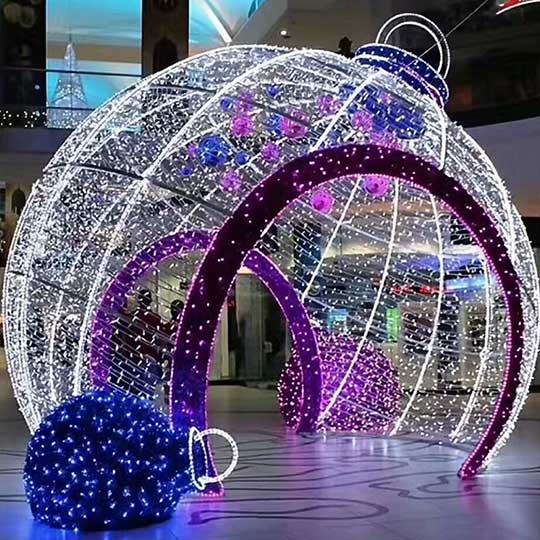
In large-scale lighting projects, especially for festive and decorative displays, transportation, storage, and handling costs can quickly become significant parts of the overall budget. Fortunately, with removable or modular design, these costs can be significantly reduced, while also improving efficiency. Let’s break down how this design approach can benefit your next project.

1. Reduce Shipping Volume, Lower Transportation Costs
The shipping costs of large decorative lighting pieces are often a key factor in the overall project expenses. Removable structures can dramatically reduce the volume of the lights during transport, making the shipping process more efficient and cost-effective.
Smaller Disassembled Volume: Traditional lighting setups with fixed structures often require large packaging. With a modular design, each lighting piece can be disassembled into smaller parts, allowing them to be packed more efficiently.
Optimized Space Utilization: By breaking down the lights into smaller components, more units can be tightly packed into the same container, minimizing unnecessary gaps and reducing transportation costs.
2.Lower Handling Costs, Improve Work Efficiency
During transportation, lighting units need to be loaded and unloaded, a process that typically involves a lot of manual labor. Removable designs simplify this process, saving both time and labor costs.
Lightweight Materials: Many modular decorative lights use aluminum or PVC frames, which are significantly lighter than traditional materials, making handling easier.
Simplified Handling: With a removable structure, lights can be quickly taken apart and reassembled at the installation site. This reduces the need for labor-intensive assembly and disassembly, improving efficiency and reducing time spent on-site.
3.Storage Convenience, Save on Storage Space
Storage is another crucial area where removable designs shine. After arriving at the destination, lighting units often need to be stored until they are ready for use.
Reduced Storage Space: Disassembling decorative lights into smaller parts allows them to occupy much less space in a warehouse, making it easier to store and manage.
Organized Storage: By separating components, different types of lights, accessories, and parts can be stored more efficiently, helping to keep inventory organized and enhancing warehouse management.

4.Long-Term Use and Reusability
The benefits of a modular design extend beyond just shipping and storage — they also contribute to the long-term durability and reusability of the lights, particularly for commercial spaces, annual events, or citywide installations.
Recycling and Reusing Parts: The modular design allows for easy disassembly, meaning parts can be reused for future installations, reducing waste and lowering overall costs.
Extended Lifespan: Because the lights are built to be easily assembled and disassembled, the structure is less likely to be damaged, ensuring the lights remain in excellent condition for years of use.
🌟 Conclusion
The removable structure design of decorative lighting not only increases shipping efficiency and saves storage space but also helps reduce labor costs during installation and handling. This design approach is especially beneficial for large-scale projects like city displays, commercial showcases, and seasonal holiday events. By adopting modular lighting solutions, companies can lower logistics costs, improve storage management, and maximize the reusability and lifespan of their lights.
By choosing removable lighting structures, you make an investment in long-term efficiency, sustainability, and reduced operational costs.