Practical Insights & Solutions for Commercial and Project Buyers
Motif lights losing their shape during transportation is not caused by a single factor.
In most cases, it’s the result of design structure, material selection, packaging methods, and logistics conditions working together.
From the perspective of buyers, importers, and project managers, this article provides a practical guide to help you quickly assess transportation risks when selecting products or communicating with suppliers.
1. Why Are Motif Lights Prone to Deformation During Transport?
- Irregular Structural Design
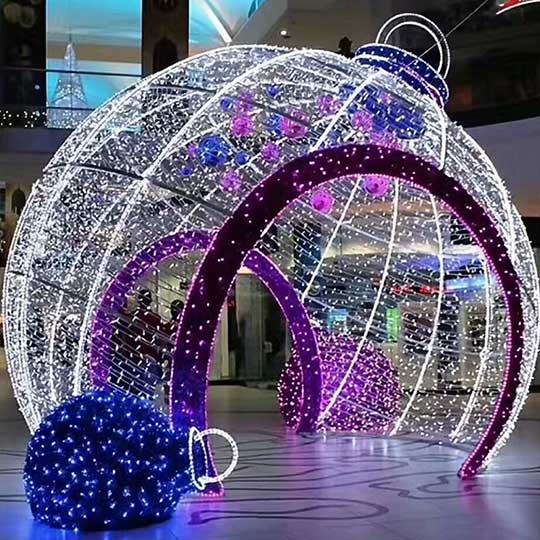
Motif lights such as gift boxes, animals, arches, and 3D letters often
feature:
• Hollow structures
• Multiple curves and angles
• Uneven load-bearing points
During long-distance shipping, stacking, and vibration, pressure tends to concentrate on specific areas, leading to structural displacement and deformation.
2. Insufficient Frame Strength
Common risk factors include:
• Steel wire with insufficient diameter
• Aluminum frames with thin wall thickness
• Plastic frames that become brittle in low temperatures
To reduce costs, some entry-level products compromise frame strength, which significantly increases transportation risks.
3. Excessive “Soft Connections” Between Frame and Lighting
If the light strips are:
• Fixed only with zip ties or adhesive points
• Lacking secondary reinforcement
Vibration during transport can cause the lighting to shift, pulling against the frame and gradually distorting the overall shape.
4. Packaging That Doesn’t Match the Structure
High-risk packaging practices include:
• Direct carton packing without internal support
• Stacking multiple motifs together
• No molded foam or internal frame
For overseas sea freight, 40–60 days of vibration and compression can easily cause deformation that cannot fully recover.
5. Marine Shipping Environmental Factors
• Long-term stacking pressure
• Temperature fluctuations inside containers
• Humidity softening certain materials
These factors amplify structural weaknesses that may not be obvious at first glance.
2. How to Effectively Prevent Deformation DuringTransportationControl Risk at the Design Stage
• Choose modular, detachable, or foldable structures
• Reinforce key load-bearing points
• Add hidden supports at bends and corners
For B2B buyers, this is often the first step in reducing after-sales issues.
Frame Materials Must Be Structurally Reliable
• Steel wire meets or exceeds specified diameter standards
• Aluminum frames meet project-grade thickness
• Outdoor models prioritize metal frames with anti-rust treatment
Visual appearance alone is not enough — always confirm structural specifications.
Multi-Layer Fixation for Lighting Components
• Combine clips, zip ties, and reinforced fixing points
• Strengthen high-vibration areas
• Prevent light movement from stressing the frame
Packaging Designed Around the Motif
Professional factories typically use:
• Customized inner supports or molded foam
• Individual packaging for each motif
• Outer cartons tested for compression resistance
📦 Good packaging is an essential part of transportation protection, not an optional cost.
Transportation Testing for Large Projects
For shopping malls, municipal projects, or large retail orders:
• Simulated stacking tests
• Vibration testing
• Sample verification after long-distance shipping
This step often saves significant costs later.
3. Practical Advice for Buyers and Procurement Teams
When evaluating motif light suppliers, ask these three questions directly:
-
What is the frame material and thickness?
-
Do you provide customized shape-protection packaging?
-
Do you have experience with similar commercial or municipal projects?
Suppliers who can answer clearly are usually more reliable partners.
Final Thoughts
Transportation stability is not just about logistics — it reflects the supplier’s design capability, material standards, and project experience.
If you’re sourcing motif lights for shopping malls, commercial streets, or festive installations and want lower transportation risk and better structural reliability, feel free to reach out.