Christmas tree lights are the heart of your holiday decorations, creating a warm and festive atmosphere. However, one common issue that arises is light failures that can disrupt your holiday spirit. By following a few simple installation and connection tips, you can significantly reduce the risk of failures and ensure your lights shine brightly throughout the season. Here are some key tips:
Check Light String Quality and Wiring
Before installation, always check the quality of your Christmas lights. Ensure there are no damaged bulbs or worn-out wires. Pay special attention to the wiring connections to make sure there are no breaks or exposed wires.
• Tip: Choose waterproof and weather-resistant light strings to ensure they are suitable for different environmental conditions, especially for outdoor use.
Use the Right Outlets and Extension Cords
Make sure to use outlets and extension cords that match the specifications of your lights. Avoid overloading the circuits by using cords that can handle higher power than your lights require. For larger Christmas tree lights, it’s recommended to use outlet plugs with fuses to cut off the power in case of overload, protecting the circuit from damage.
• Tip: Choose extension cords with higher current capacity than the rated power of the lights to prevent overheating.
Segment Your Connections and Avoid Over-Tension
If connecting multiple strings of lights, ensure each connection point is secure and avoid overstretching or pulling the cords too tightly. Overly tight connections can cause poor contact and lead to malfunction.
• Tip: Prefer light strings that can either be connected in series or parallel to suit your lighting design.
Avoid Bending the Wires
When setting up the lights, avoid over-bending the wires. Bending can cause the internal wires to break or become loose, leading to lights that won’t turn on or cause a short circuit.
• Tip: Use lightweight and flexible light strings, which make the setup easier and prevent damage during installation.
Regularly Check Your Lights and Connections
Throughout the holiday season, regularly check the lights to ensure none of the bulbs are out or the wiring is damaged. Check each bulb carefully to ensure everything is functioning properly.
• Tip: If you notice a bulb that isn’t lighting up, replace it immediately to prevent the whole strand from malfunctioning.
Avoid Extreme Weather Conditions
For outdoor decorations, avoid using Christmas tree lights during extreme weather conditionslike heavy rain or snow. Choose lights with protective outer casings to safeguard against moisture.
• Tip: If using lights temporarily outdoors, take them down when extreme weather is expected and reinstall them once conditions are safe.
Use Batteries and Remotes Properly
For battery-operated lights, make sure the batteries are fully charged and replace them regularly to avoid battery depletion causing the lights to stop working.
• For remote-controlled lights, ensure there is no signal interference between the remote and the lights, and that the remote and receiver are positioned correctly for optimal performance.
Opt for High-Quality LED Lights
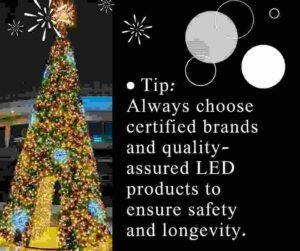
Using LED lights for your Christmas tree lights ensures durability, energy efficiency, and long-lasting performance. LED lights are low-temperature resistant, and they last much longer than traditional bulbs without burning out.
• Tip: Always choose certified brands and quality-assured LED products to ensure safety and longevity.
Conclusion
By following these simple yet effective tips, you can significantly reduce the likelihood of failures in your Christmas tree lights, ensuring that your lights shine brightly and beautifully throughout the holiday season. Proper installation and maintenance are key to creating a festive and safe environment