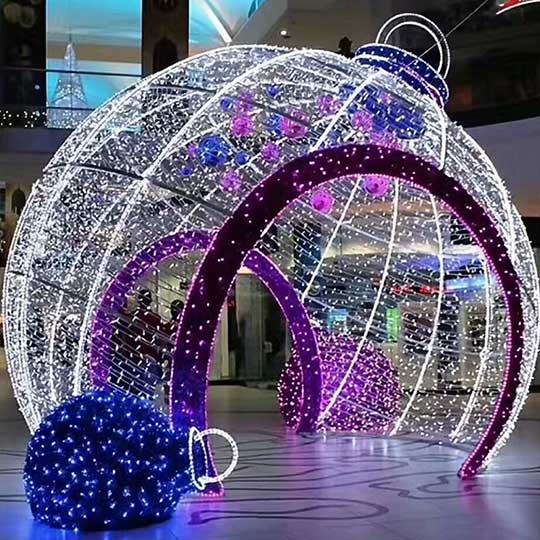
When it comes to commercial and festive lighting, the decision to keep indoor and outdoor lighting colors consistent isn’t always a must. However, there are several key factors that can help you decide whether or not uniformity is necessary.
1. Brand Consistency
For projects involving a brand or commercial space, maintaining
consistent lighting colors indoors and outdoors can help strengthen the
brand’s identity and create a seamless customer experience. For example,
if the lighting outside a mall matches the interior lighting, it can
enhance the overall immersive feel for customers, offering a cohesive
look from the moment they approach the building to when they enter.
2. Setting the Scene
Indoor and outdoor lighting are often used in different settings, with
each having unique ambiance and functional requirements. The lighting
color choices might vary based on the desired effect:
• Indoors: Warm white (2700K-3000K) is often preferred to create a cozy,
comfortable atmosphere, ideal for malls, hotels, and restaurants.
• Outdoors: Cool white or dual-tone lighting (such as alternating cool
and warm whites) is often more suitable for festive décor, highlighting
architectural features and improving visual impact at night.

3. Holiday or Special Events
During festive seasons, the choice of lighting often reflects the theme
and colors of the holiday. For instance, during Christmas or other
specific holidays, you may choose lighting in festive colors (red,
green, gold, etc.), which may not need to match the indoor lighting. The
goal is to evoke the spirit of the season, which can be achieved through
vibrant, thematic colors without the need for strict consistency between
interior and exterior lights.
4. Power and Maintenance Considerations
Different areas may require different power loads and maintenance
schedules. Outdoor lighting typically needs to be more robust, with
higher brightness levels and weather-resistant features, whereas indoor
lighting is more focused on creating a particular ambiance. Given these
differing requirements, uniformity between the two may not always be
necessary, particularly in large commercial spaces.
Conclusion: Balancing Aesthetics and Functionality
Overall, the decision to keep indoor and outdoor lighting colors
consistent should depend on several factors, including brand identity,
setting, holiday theme, and maintenance considerations. When you do want
to maintain consistency, you can opt for similar color tones without
being overly strict about matching them exactly.